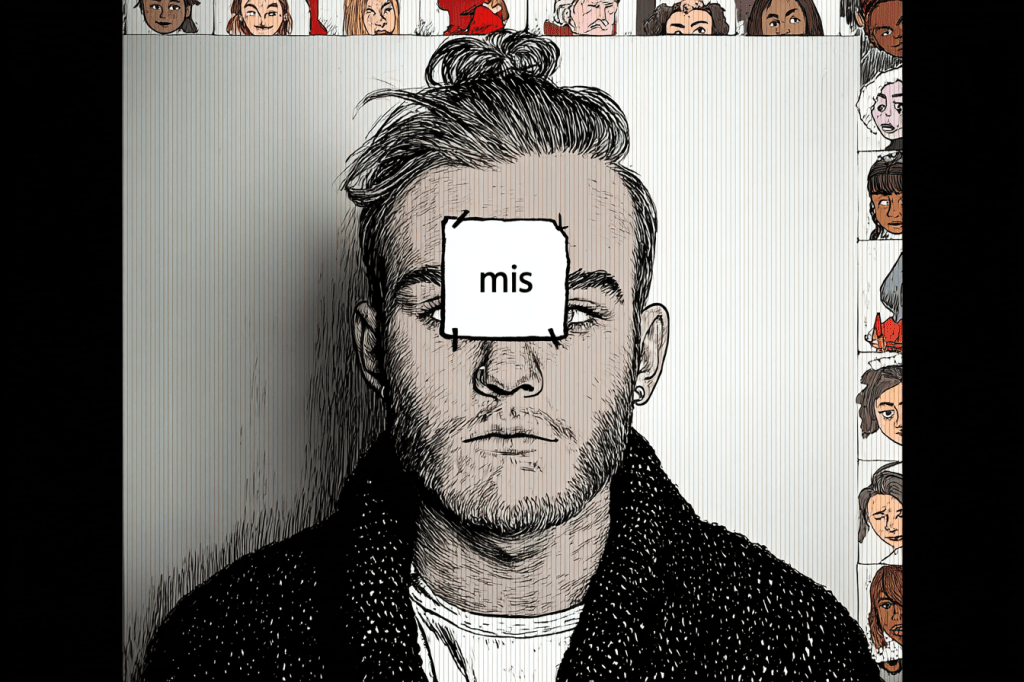
Tag: health

  • Why Misdiagnosed Deserves To Exist as an Identity

    Why Misdiagnosed Deserves To Exist as an Identity

    There are so many (unconvincing for misdiagnosed persons) reasons why it should not exist.

    • If you say “misdiagnosed” someone might assume you’re asking for seconds, for another (more severe?) diagnosis
    • The path of healing and recovery is about forgiveness. By claiming to have been misdiagnosed, it’s almost as if you haven’t chosen to forgive your doctors, or our mental health system, or the system of capitalism from which it arises
    • It is four whole syllables long, what a mouthful!
    • It reminds people of mental patients who shout: “I was MISDIAGNOSED” as if their lives and needs for integrity almost depended on someone accepting this
    • It’s a threat to the ordered (and apparently rather fragile) world of Capital Psychiatry and the (B?)DSM, and the powers that be shall not have it!
    • If you say “misdiagnosed” an evil leprechaun in a grey pinstripe suit will come and, gosh, we just… we just can’t have it!

    But then we are inevitably confronted with unchanging fact that leprechauns do not exist except in fables and stories, but the experiences and facts of your misdiagnosis did and do. It exists! So to have a word for it, a word besides “it” or “the bad thing that happened to me or with me or whatever” or “my past” or “my struggle” or “yeah that fucking nightmare huh”, to contain it in a single descriptive if not perfect word has immense value.

    No one goes around wanting to be misdiagnosed. And yet, severe and traumatic experiences of misdiagnosis do happen to a certain group of people. These people deserve an identity.

    Much ink has been spilled reclaiming various terms such as madness, and this extends to mad activism and mad pride. While reclaiming terms of hate have functioned well for identity politics in the area of sexual difference, the area mental health and mental difference operates with different dynamics. It isn’t necessarily wrong for a misdiagnosed person to attempt to reclaim madness, but it feels to us a spiritually onerous burden to suggest that they must retain deep anger at the system that misdiagnosis along with a stance of activism to merely be regarded as having an identity. When the system purveys the idea that misdiagnosed persons must be “one of the good mentally ill people” to then earn a facsimile of respect, demanding they must also be “one of the good mad activists” to be seen as truly intelligent, truly liberal, or truly engaged with reality only heightens the impossibility of their situation

    “Psychiatric survivor” and “ex-patient” are also words that are used to mean something roughly similar, and already exist as acceptable identities in certain circles — though none with active or regular peer support meetings as far as we can tell. “Psychiatric survivor” is seven syllables, three more than misdiagnosed. We have no beef with anyone who identifies as a psychiatric survivor. We also have not yet witnessed any sustaining efforts for there to be support groups for such individuals — though for all we know they could be on an island somewhere. Comparatively, “misdiagnosed” and “misdiagnosed person” suggest not that psychiatry is evil or that psychiatrists are evil (extreme or idiosyncratic views) but that a mistake was made. Can the world not allow that mistakes are occasionally made in a particular field of study? “Survivor” also implies that no talking or sitting should be in order, only escape. Contrastingly, with “Misdiagnosed” as an identity, we focus on our own lived experience, and leave room for analysis and careful thought, that those of us who feel called to engage as patients in therapy as we see fit.

    In reality, my identity as a misdiagnosed person does not pose any threat to psychiatry and neither would yours, should you choose to adopt one. In reality, honest feedback is a kind of support, even if harsh. The worst that could happen to psychiatry might be: we cause greater attention to mistakes that have been made and are made and better processes for more collaborative and accurate diagnosis processes. This is not to say we ignore power imbalances or are interested in vain compromise. Good intentions are not enough for change, commitment and strength are also needed. The misdiagnosed founders of NAMI may have started with good intentions, but in their compliance with Diagnosis Theory, it was perhaps inevitable that they accepted pharmaceutical dollars, a corrupting influence and capitulation to the biochemical model that renders their claims of activism vacuous and their culture toxic. Mad activists calling for revolution are not necessarily foolish in their calls.

    We as allied misdiagnosed persons hope to cause a revolution in the sense of how psychiatry looks at the biochemical model of mental illness that has been prevalent if not wildly addictive for the past forty years since at least Osheroff V Chestnut. Once more accurate information comes to light, psychiatry and psychiatrists may choose of their volition, in the language of step four, of The Twelve Steps “make a searching and fearless moral inventory” of themselves. We concede ahead of time that this might seem preposterous to psychiatry’s more committed detractors. But it is our belief that anyone can let go of the harmful pattern of misdiagnosing others and themselves.

    I am a misdiagnosed person is a way of saying:

    • Facts and information and learning (including even book learning sometimes!) are important to me, as is useful feedback
    • I have faith that the people who matter to me will understand that I am not insane (and maybe even never have been, though indeed, that is an insanely high bar )
    • I am an honest person but struggled in the past with the concept of healthy denial
    • I deserve to exist as a person in this world, despite all of my relational and psychological trauma from my experiences of misdiagnosis telling me I do not
    • I do not necessarily agree with our mental health system of diagnosis, as they may (in the language of Nonviolent Communication on diagnosing others ) ultimately do more harm than good by creating conditions for tragic self-fulfilling prophecy
  • Why We’re Not Forgetting About It

    Why We’re Not Forgetting About It

    Q:

    If your mental illness was misdiagnosed, why not just forget about it?

    A: 

    It’s a natural enough question. If something is in the category of “mental” and as well as the category of ”bad“, then might not forgetting simply be answer?

    Sadly, in the lives of many misdiagnosed persons, those who demand that they forget the trauma of their misdiagnosis are often the same voices who in another turn demand they accept any number of disastrous traits to fundamentally or biochemically exist within themselves, without evidence, often without a coherent belief of those traits from the person making those demands, but only a false sense that emotional safety requires abject compliance with the games we interpret society as playing.

    One can never prove with positive, physical, or medical evidence that you do not have any particular mental illness (with rare exception) that someone may accuse you of having. And by this same token, though not at all once a medical diagnosis is rendered, there is absolutely no official process within psychiatry for it to be revoked in any way. If cancer is eliminated from the body, there are tests that can prove that it is in remission. But whether treatment is helpful to a mental health patient or not, there is no avenue in our medical system for an official stamp of remission, much less any place to investigate or petition for the diagnosis to be officially regarded as an error. If a diagnosis of mental illness can be official, shouldn’t also that diagnosis’s status as an error, just as any other medical diagnosis? It is not our purpose as an organization to reform psychiatry, as there are already voices in this space working toward this end. However, it is a part of our purpose to stand against acceptance of false realities constructed by the situation of misdiagnosis. The business and political interests of psychiatry may never align with officially recognizing the ways it makes mistakes. But we do not let that limit our own capacity to recognize harm caused by these mistakes, or what is real. Only when we are grounded in reality do we find true strength.

    We contend there is a deep overlap between people who experience the situation of mental health misdiagnosis and people who are particularly good at taking blame when they should not because they believe that capitulation is politeness, or being shamed into silence when their truth is actually quite accurate and their voices are actually quite necessary. We believe it is because some people either have a natural suppressed defense mechanism of denial, or have learned to suppress it. If someone accused you of a crime you did not commit, would you have the strength to deny it and defend the truth? And what if the cost became so great and the strategies of your accusers too extreme and you either capitulated or were merely defeated, would this put on your soul and on your relationship with truth? For people who have been misdiagnosed, merely accepting that they have experienced a traumatic misdiagnosis can be an important and enlivening step. Merely accepting the reality of their situation, and that there is nothing toxic or impolite about their silent knowledge of reality can go a long way toward strengthening their psychological defense mechanisms and overall mental health.

    Those who have not been misdiagnosed may be so thoroughly insulated from their empathy on this subject and with “these kinds of people” that, from positions as caregivers, they may insist the experience should be easily forgotten. This may be coupled within the same caregiving authority that previously demanded that the misdiagnosis and it’s litany of undesirable traits and associations be accepted by the misdiagnosed person as their one true psychological reality. The value of “Acceptance” thus becomes distorted in the world of the misdiagnosed person, where it becomes synonymous with accepting the obvious contradictions of their care. Meanwhile, their capacity to seek, receive, and offer real acceptance is wounded. The pattern may also be coupled with a game in which the non-empathizing non-misdiagnosed caregiver seeks to control the details of how the misdiagnosed person shares their struggles with anyone at all, and with the misdiagnosed person’s care being contingent on the continued adherence to proper behavior as “one of the good ones” among those who fundamentally and permanently reside in the category of undesirable, inappropriate, uncomfortable, or incomprehensible.

    On our good days, we may become so involved in our work or creativity, in the fulfillment of our needs or in connection with others, that we natural forget about our the negative and difficult experiences we’ve faced in life. This is natural effect of our minds being naturally associative. But our minds are not only associative, we are not Pavlov’s dogs or jellyfish dumbly floating in an ocean of whatever current association happens by. We have logic, thoughts, desires, and will. When we comply with a demand that in order to be a “good patient” we must simply forget and all will be well, we invariably cut ourselves off from our capacity to think for ourselves about the things that matter in our lives, to solve our own problems, to fulfill our own needs. The more we insist however that beyond this natural phenomenon of forgetting that we are somehow obligated to forget, the further we are taken from our natural capacity to feel and indeed go with the flow of life. We become split and blocked. In so far as we succeed in our unnatural missions of forgetting, the world in which we have pain and the world in which our pain must not exist grow more and more distant. In other words, we undertake internal thought-patterns and bloodsports of psychic polarization, psychic splitting, and self-abuse and so become more and more bipolar, schizophrenic, and otherwise disordered.

    Should one achieve success in life, if one has been misdiagnosed, it is doubly an achievement. But can we call such success truly sweet without others who accurately understand all that was overcome to achieve it, or more to the point, while forgetting it oneself? Does the action of erasing the memory of one’s struggle really ever bear the fruits of satisfaction? Really these are unrelated; no living creature would ever endeavor to erase its own memory or knowledge unless under extreme stress or within a relationship of coercion. The kind of psychological satisfaction that comes from real growth and learning may be the sweetest that human life has to offer, and it is not available within the construct of a misdiagnosis, with its insistence on mental disease being lifelong, biochemical, and immovable, and it’s strong propensity to isolate misdiagnosed persons from community — which it flatters itself in believing it serves to protect. Engaging with a therapist may go a long way in satisfying our needs for connection and meaning, especially if it is the first honest such engagement amid years of capitulation to the construct of misdiagnosis, but it is a very different from engaging with peers.

    Typically, families of someone misdiagnosed may seek to guide the misdiagnosed person to forget or erase the trauma of misdiagnosis, partly in the hope of erasing their own feelings of guilt. Sometimes, much of the guilt they feel is based on having enforced the games of misdiagnosis itself, believing or seeking to believe from a place of feeling a superior sense obligation they acted responsibly in the interests of their misdiagnosed family member. Though they may also realize (whether or not they admit this realization) the falseness of the misdiagnosis paradigm, they may be reluctant to face their own difficult psychic reality of having made an error in judgement and having misused their authority in a hurtful way. Still, there are those (both who have experienced misdiagnosed and those who have not) who are capable of giving care, support, and understanding to misdiagnosed persons without making extreme or absurd demands regarding the coerced holding of false and negative self-images and labels, or prohibiting healthy abstinence from unhelpful treatment.

    True healing is not forgetting. True healing is not erasure.

    We don’t need to forget to forgive ourselves and others.

    What you don’t remember you repeat.

    And the parts of one’s real self that are mislabeled and suppressed in the oppressive games of misdiagnosis will invariably appear again.

    Without self-understanding and without peer support, we remain fragmented. And this is a key mechanism that keeps the self-fulfilling prophecy of misdiagnosis self-fulfilling.

    We believe in the power of peer-based communities such as Misdiagnosed Anonymous to help us truly learn from our mistakes and from each other and to truly heal.

    If you or someone you know has experienced the trauma and oppressive games of misdiagnosis, we are very glad you found us. While we support the autonomy and health of your mind (including the healthy sides of its defense mechanisms!) we hope you don’t let the pain of your experiences or knowledge prevent you from holding and accepting yourself and your reality, seeking understanding from those who understand, and seeking connection from those who would like to connect with you.